When wildfire smoke settles over the Treasure Valley, the cleanest air in your neighborhood should be inside your own house. A-1 Heating, Air Conditioning & Electric helps Meridian, Boise, Nampa, Eagle, and McCall homeowners keep smoke out of their indoor air with high-efficiency filtration and the Lennox PureAir air purification system, which captures more than 95% of fine particles down to 0.3 micron. A-1 has served Idaho families since 1956 and is a 15-time Dave Lennox Award winner, so the crew knows how our smoke seasons behave and what actually clears the air in a real Idaho home. This guide walks through how smoke gets inside, who is most at risk, how to read the air quality index, and the equipment that makes the biggest difference.
Why Idaho wildfire smoke is a Treasure Valley problem, not a one-off
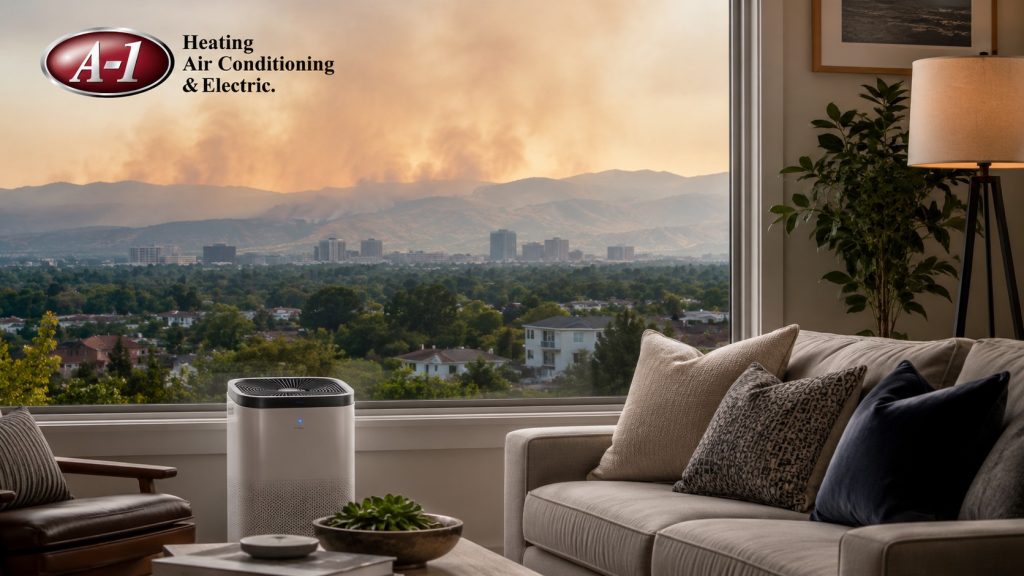
Wildfire smoke is now a predictable part of the Idaho summer, usually from July through September. In late July 2026, the Idaho Department of Environmental Quality issued an air quality advisory covering the southwest and west-central counties A-1 serves, including Ada, Canyon, Gem, Boise, Elmore, Owyhee, Payette, Valley, and Washington, with the Air Quality Index climbing into the Red (Unhealthy) range and parts of the valley reaching Very Unhealthy. Much of that haze was smoke drifting in from regional wildfires, including fires burning in Central Oregon, a reminder that you do not need a fire nearby to get a week of bad air.
Does smoke from a fire two states away really reach inside your house? It does. Fine particles ride the wind for hundreds of miles and slip indoors through normal gaps around doors, windows, and your HVAC system. Even a closed-up home in Meridian or Nampa will see indoor air quality slide over a multi-day smoke event unless something is actively filtering the air. In the mountains around McCall and Cascade, the same smoke often settles into the valleys and lingers, which matters for both full-time residents and vacation-rental owners hosting guests.
Who is most at risk from wildfire smoke indoors?
Wildfire smoke affects everyone, but it hits some groups harder and sooner. According to the EPA, the fine particles in smoke can trigger symptoms in healthy adults and pose a serious risk to children, older adults, pregnant women, and anyone with asthma, COPD, or heart disease. During Red and Very Unhealthy air days, the Idaho DEQ warns that even people without existing conditions can start to feel effects like burning eyes, a scratchy throat, headaches, and shortness of breath.
Why does one smoky week hit a child harder than an adult? Children breathe more air relative to their body size and their lungs are still developing, so they take in more smoke per pound. That is why keeping a low-smoke room inside the home matters most for households with young kids, older parents, or anyone managing a respiratory or heart condition. Clean indoor air is not a luxury on those days, it is the main way to reduce exposure without leaving town.
How do you know when your indoor air is unhealthy?
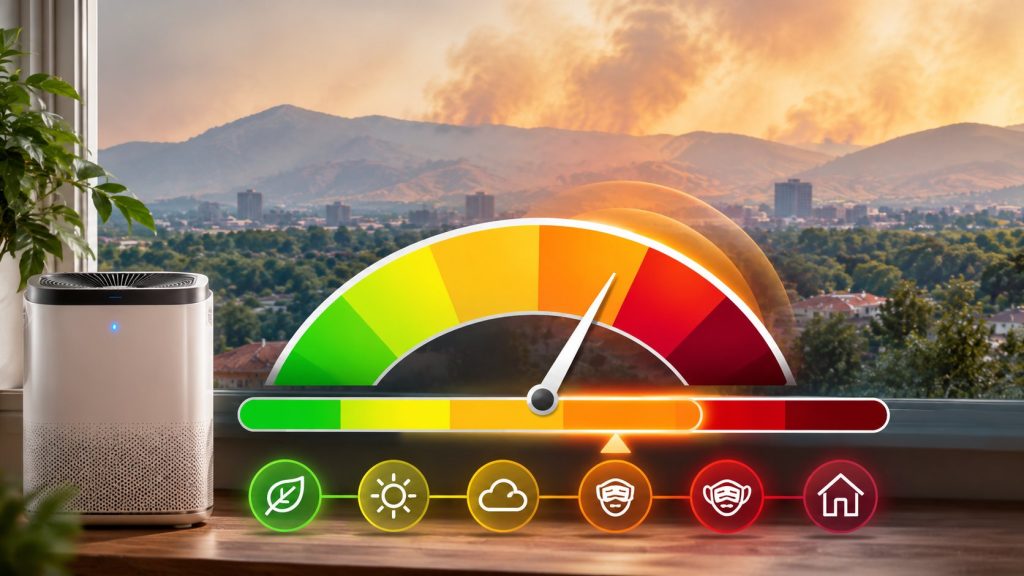
You can track outdoor smoke with free, trusted tools and use it as your cue to close up and filter. The EPA’s AirNow.gov and the Idaho DEQ air quality page report the current Air Quality Index (AQI) for the Treasure Valley and Valley County, and community PurpleAir sensors add hyperlocal readings street by street. The AQI scale runs from Green (0 to 50, good) up through Yellow, Orange, Red (151 to 200, unhealthy), Purple, and Maroon (hazardous).
What number should make you act? Once the AQI passes about 100 (Orange), sensitive groups should limit time outdoors and run indoor filtration. At Red (151 and above), everyone should stay inside, keep windows closed, and run their HVAC fan through a high-efficiency filter or a whole-home purifier. Indoor air is not automatically safe just because you cannot see haze inside, so use the outdoor AQI as the trigger and let your filtration do the work.
Why your furnace filter isn’t stopping wildfire smoke
A standard one-inch furnace filter is built to protect your equipment, not your lungs. The most harmful part of wildfire smoke is PM2.5, particles roughly 2.5 microns and smaller that the EPA says can travel deep into the lungs and into the bloodstream. Basic fiberglass and low-MERV filters let those particles pass through almost untouched, so the air keeps recirculating the smoke.
What does it take to actually catch smoke particles? MERV, which stands for Minimum Efficiency Reporting Value, rates how well a filter captures particles, and the EPA recommends at least MERV 13 for wildfire smoke in a home HVAC system. A MERV 13 filter captures a meaningful share of PM2.5, while the MERV 16 media in the Lennox PureAir goes further and captures more than 95% of particles down to 0.3 micron. One caution: not every furnace can handle a very high-MERV filter without airflow changes, so check that your system supports it before you upgrade. A-1 confirms your blower and ductwork can handle a denser filter before recommending one.
How to protect your home during a wildfire smoke event
1. Upgrade your filter to MERV 13 or higher, if your system supports it. Swap your standard furnace filter for a MERV 13 (or better) filter your blower can handle. This is the fastest way to start capturing PM2.5 smoke particles, but an older blower forced through a too-dense filter can restrict airflow, so confirm the fit first.
2. Set your HVAC fan to “on,” not “auto.” Running the blower continuously pushes more household air through the filter each hour, which the EPA notes meaningfully improves how much smoke gets removed.
3. Change filters more often during smoke season. Heavy smoke loads clog filters fast. Check yours every two to four weeks during an event and replace it once it looks gray or loaded.
4. Close fresh-air intakes and seal obvious gaps. Shut any HVAC fresh-air or economizer intake, keep windows and doors closed, and add temporary weatherstripping where you feel drafts. Run kitchen and bath exhaust fans only when needed.
5. Add whole-home purification before the next event. A filter helps, but a whole-home air purifier like the Lennox PureAir removes far more fine particulate and also destroys the smoke odors and VOCs a filter leaves behind.
Your three options for cleaner indoor air, compared
Most Idaho homeowners choose from three levels of protection, and they work well stacked together. A portable HEPA unit is the cheapest and cleans one room, a MERV 13 filter upgrade protects the whole house at the filter, and a whole-home indoor air quality system delivers the highest capture across every room your HVAC serves.
| Option | What it does | Best for | Limits |
| Portable HEPA air purifier | Cleans the air in a single room | A bedroom or nursery “clean room” | Covers one room only |
| MERV 13 filter upgrade | Raises capture at your furnace | Fast, low-cost whole-home first step | Particles only; check system supports it |
| Whole-home purifier (Lennox PureAir) | Treats every room via ductwork | Highest whole-house protection | Professional install; best before season |
Which one is right for your home? For a single tough room, a portable HEPA is fine. For whole-house protection through a multi-day event, a MERV 13 filter is the floor and a whole-home purifier is the ceiling. A-1 Heating can walk your home and recommend the mix that fits your layout and budget.
The Lennox PureAir system, whole-home air purification built for smoke season
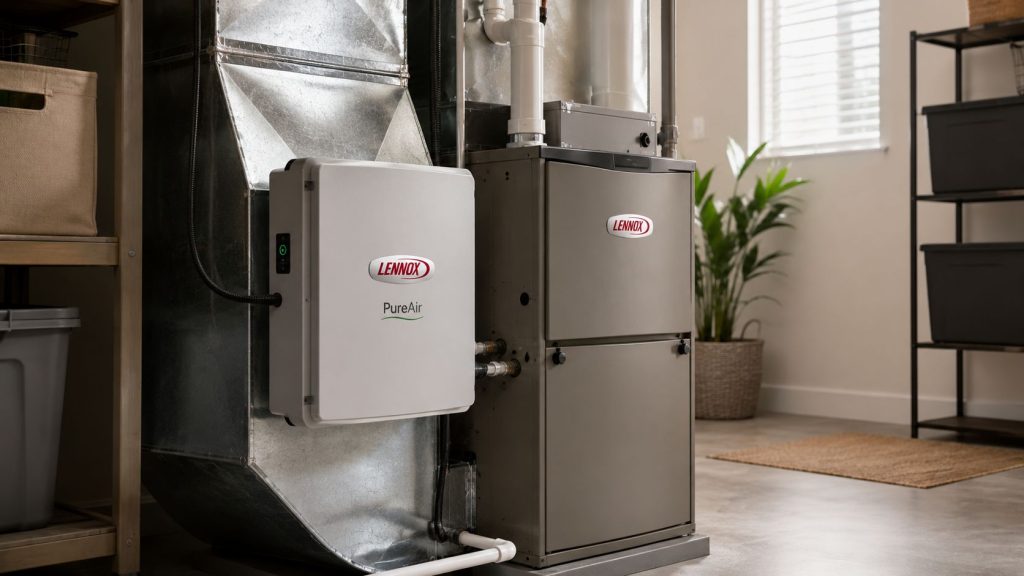
The Lennox PureAir air purification system installs into your existing ductwork and treats every room your HVAC serves, and A-1 Heating installs it across the Treasure Valley and in the McCall area. Because Lennox manufactures the PureAir system itself, A-1 works with the maker of the equipment rather than reselling a generic add-on, the same manufacturer-direct advantage A-1 brings to Lennox furnaces, heat pumps, and ductless systems.
What makes it better than a MERV 13 filter alone? The Lennox PureAir uses a Carbon Clean 16 (MERV 16) media filter that, per Lennox, removes more than 95% of fine particles down to 0.3 micron, which is squarely in the PM2.5 range that makes wildfire smoke dangerous. It also uses a photocatalytic oxidation process that destroys roughly half of household odors and VOCs, so it addresses the smoke smell and chemical vapors a particle filter ignores. Because it treats the whole house through the ductwork, it keeps working quietly in the background through a multi-day smoke event.
Not sure whether your furnace can support a whole-home purifier? Most Treasure Valley homes with existing ductwork can, and A-1 confirms compatibility on site and recommends the right Lennox PureAir configuration for your home before anything is ordered.
Smoke, vacation rentals, and second homes in McCall
For McCall and Valley County property owners, wildfire smoke is also a guest-experience and booking issue. A short-term-rental owner whose guests arrive to a smoky-smelling cabin during peak summer season risks refunds and poor reviews, and smoke often lingers in the mountain valleys longer than a quick afternoon wind can clear it. A-1 Heating serves the McCall mountain market with HVAC and AC repair in McCall, so a whole-home purifier and a fresh MERV 13 filter can keep a rental comfortable between turnovers.
Why does this matter more for a second home? Because no one is there daily to swap a clogged filter or run the fan during a smoke event, a set-and-forget whole-home purifier does the work for you. That keeps the air clean for guests and protects the HVAC system between visits. McCall and Valley County homeowners can reach A-1’s McCall office at (208) 634-1586 to schedule HVAC and indoor air quality service.
What to do after the smoke clears
Once the AQI drops back to Green, a few steps reset your home for the rest of summer. Replace the filter you ran through the smoke event, since it is likely loaded with fine particulate, and return your fan setting to your normal schedule. This is also a good time to book an HVAC maintenance visit so a technician can check airflow, confirm your filter fit, and make sure the system is ready for the next smoke day or the heating season ahead.
Should you have your air handler and coil looked at after heavy smoke? It is worth a service check. A-1’s NATE-certified technicians can inspect the system, verify your filtration is doing its job, and recommend a whole-home purifier if your filter alone struggled to keep up during the event.
What affects the cost of whole-home air purification?
The cost of adding whole-home air purification depends on your home and system, not a single sticker price. The main factors are the size of your home and the airflow (CFM) your system moves, the Lennox PureAir configuration you choose, the condition and layout of your existing ductwork, and your thermostat setup. A-1 Heating provides free estimates on indoor air quality installations, so you get a firm number for your specific home before deciding.
Is it worth it over buying several portable units? For a whole house, one ducted system usually covers far more air than a handful of portable purifiers and runs quietly in the background. A-1 can price both approaches during the assessment so you can compare them side by side.
Why A-1 Heating for indoor air quality in Idaho
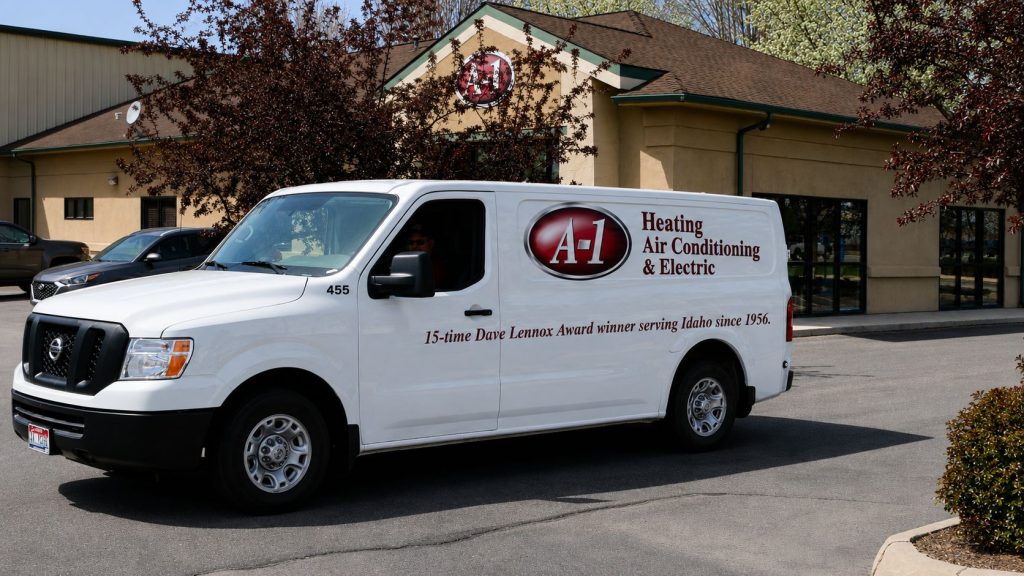
A-1 Heating, Air Conditioning & Electric has cleared the air in Idaho homes since 1956, and its 15-time Dave Lennox Award standing puts it among the top Lennox dealers in North America. A-1’s NATE-certified technicians size and install air purification systems in Meridian and across the full Treasure Valley, including Meridian, Boise, Eagle, Nampa, Star, Kuna, and Caldwell, and for the McCall and Valley County mountain market where smoke and second-home service windows both matter. That combination of a 70-year local track record and manufacturer-direct Lennox equipment is why homeowners call A-1 when the air turns red.
Frequently asked questions about wildfire smoke and indoor air
Does an air purifier actually help with wildfire smoke?
Yes. A whole-home air purifier helps with wildfire smoke by pulling household air through high-efficiency media that captures the fine PM2.5 particles smoke is made of. The Lennox PureAir removes more than 95% of particles down to 0.3 micron, per Lennox, and also destroys many of the odors and VOCs that a standard filter leaves in the air.
What MERV rating do I need for wildfire smoke in Boise?
The EPA recommends a filter rated at least MERV 13 to capture wildfire smoke particles in a home HVAC system, as long as your system can handle it. MERV 13 is the practical floor, while the Lennox PureAir uses a MERV 16 media filter for higher capture of fine smoke particulate. A-1 checks your airflow before recommending a denser filter.
Is it safe to run my air conditioner during a wildfire smoke event?
Yes, it is generally safe to run your air conditioner during a smoke event as long as any fresh-air or economizer intake is closed so the system recirculates indoor air through the filter. Keep the fan set to “on” and use a MERV 13 or higher filter your system supports so the AC is cleaning the air while it cools.
How do I check the air quality in the Treasure Valley?
Check the Air Quality Index on the EPA’s AirNow.gov or the Idaho DEQ air quality page, which report current conditions for Ada, Canyon, Valley, and surrounding counties. Community PurpleAir sensors add street-level readings, and you should take action once the AQI reaches Orange or Red.
Can I add a whole-home air purifier to my existing furnace?
Most Treasure Valley homes with existing ductwork can add a whole-home purifier like the Lennox PureAir to their current furnace or air handler. A-1 Heating confirms your system’s compatibility on site before recommending a specific configuration.
Is a whole-home purifier better than a portable HEPA unit?
A portable HEPA unit cleans one room, while a whole-home system like the Lennox PureAir treats every room your HVAC serves through the ductwork. For a multi-day smoke event across a whole house, whole-home purification covers far more air than a single portable unit.
How should I run my HVAC during a smoke event?
Set the fan to “on” so it runs continuously, keep windows and fresh-air intakes closed, and use a MERV 13 or higher filter your system supports. Running the blower continuously moves more air through the filter each hour, which the EPA notes improves smoke removal.
Should I change my filter after wildfire smoke?
Yes. Replace your HVAC filter after a heavy smoke event, because it is likely loaded with fine particulate that restricts airflow and lowers efficiency. A fresh filter also prepares your system for the next smoke day or the heating season.
How fast can A-1 install a Lennox PureAir system?
A-1 Heating schedules indoor air quality assessments across the Treasure Valley and typically installs a whole-home purifier in a single visit once the right configuration is selected. The best time to install is before a smoke event, so the system is protecting your home when the AQI climbs.
Breathe easier this smoke season. Call A-1 Heating at (208) 343-4445 (Treasure Valley) or (208) 634-1586 (McCall) to schedule a same-day indoor air quality assessment and ask about the Lennox PureAir system for your home.
